
The Weekly Review: The 30-Minute Ritual That Ends Sunday Anxiety
If your weeks feel reactive and your Sundays feel dreadful, you're missing one specific habit: a 30-minute weekly review. Here's the exact template, why it works, and how to make it stick past week three.
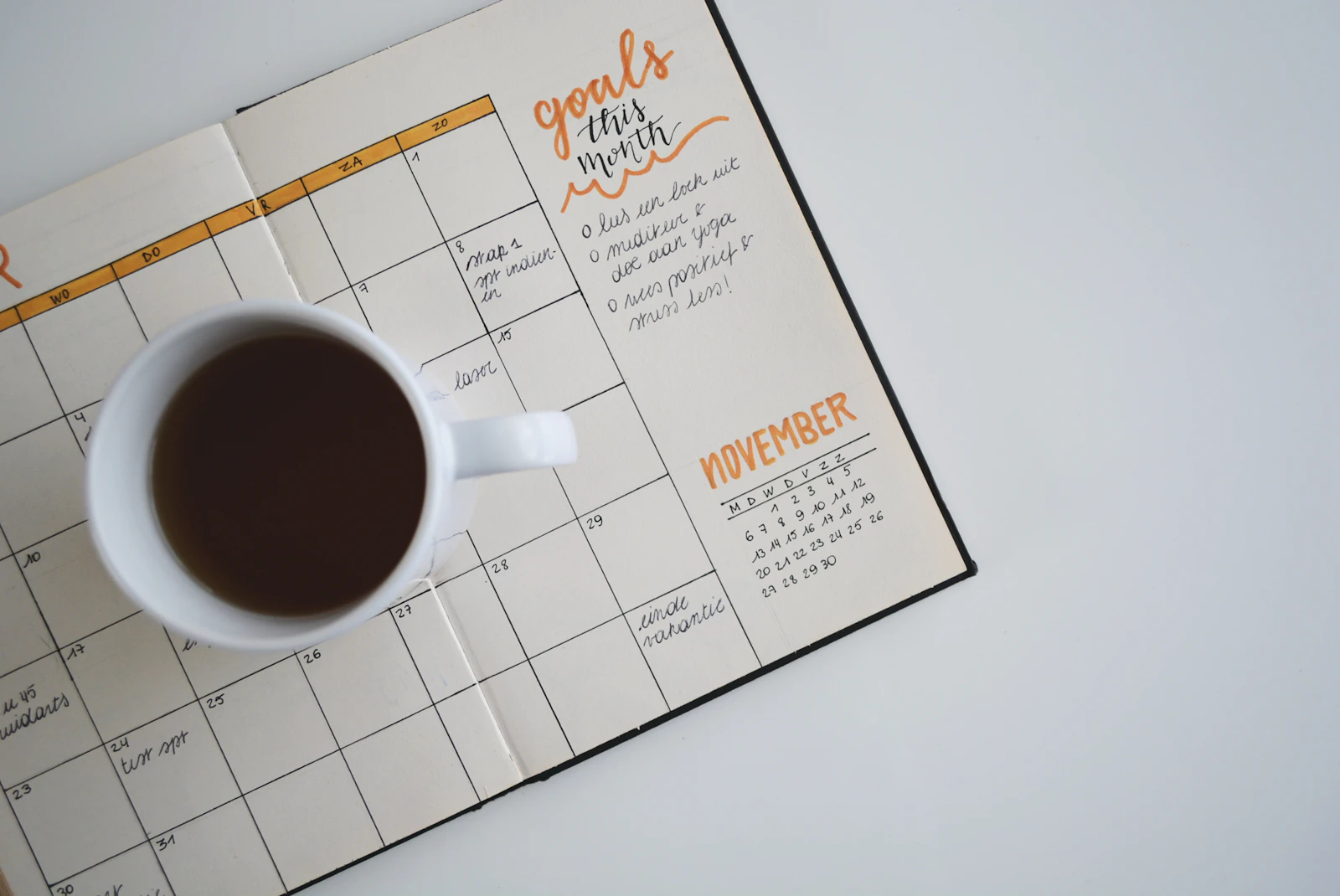
There's a specific flavor of Sunday-evening dread that has almost nothing to do with the work you're about to do on Monday and almost everything to do with the fact that you have no clear picture of what you're about to do on Monday. It's the anxiety of an inbox you haven't looked at since Friday, a to-do list from three weeks ago that no longer reflects reality, a calendar you haven't scanned, and a vague sense that you're already behind on something you can't quite name. The Sunday scaries, in most cases, are not about work being bad. They're about work being unknown.
The 30-minute weekly review is the single habit that reliably solves this, and it's the habit that separates people who feel calm about their weeks from people who feel constantly ambushed by them. It's not a productivity tool in the aspirational sense, it's a maintenance ritual, like flossing or checking your car's oil, and the value is in doing it every week for a decade, not in doing it beautifully once and forgetting for six months.
What the review is actually for
The weekly review has one core function: to close the loop between what you thought you were going to do this week and what you actually did, and to open a clean loop for what comes next. Almost every productivity system fails at the same point, you set up a plan on Monday and by Thursday it's out of date, and by the following Monday you've stopped looking at it entirely because it no longer describes reality. The weekly review is the maintenance pass that keeps the system honest, and without it every planning tool eventually collapses into the same abandoned Notion doc.
This is also, quietly, what ends the Sunday anxiety. The dread comes from having open loops your brain is still tracking but hasn't been consciously addressed, a project you haven't looked at since Tuesday, an email you meant to respond to on Wednesday, a decision you were supposed to make by Friday. Your subconscious knows they exist and keeps nagging you about them, and the anxiety is your brain's way of saying 'there are unresolved threads and I don't know what to do with them.' The review resolves the threads by naming each one and either scheduling it, deleting it, or acknowledging it exists. The nag stops when the item is named.
"Your mind is for having ideas, not for holding them. The weekly review is what makes that quote actually usable, it's the point where the ideas get out of your head and into a system you trust."
, David Allen, Getting Things Done
The 30-minute template
The whole review takes 30 minutes and moves through five sections. Each has a specific question it answers, and the point of running through them in order is that the answers to the earlier sections make the later ones dramatically easier. Skip a section and you'll notice the whole thing feels less clarifying. Keep them all and you'll notice, after four or five weeks, that the Monday-morning fog you used to fight through has quietly disappeared.
- 1. Clear the inputs (5 min): empty inbox to zero, review Slack DMs, scan calendar
- 2. Review last week (5 min): what got done, what didn't, what changed
- 3. Review the project list (10 min): each active project, current status, next action
- 4. Plan the coming week (7 min): 1-3 priorities, calendar blocks for deep work, meetings scan
- 5. Personal check-in (3 min): energy, mood, one thing to protect, one thing to say no to
The 'clear the inputs' section is the least glamorous and the most important. Until every message, email, and pending item has been at least seen and triaged, everything else in the review is being done with incomplete information. This is the section people are most tempted to skip, and skipping it turns the rest into fiction, a plan based on the reality of your inbox seven days ago, not on the reality of the actual pending work.
The project list is where the real work happens
Section three, reviewing each active project and identifying its next concrete action, is the part of the review that most people have never done at all, and it's the single largest source of the review's value. Most professionals have somewhere between 8 and 25 active projects at any given time, and most projects are stalled not because they're hard but because the next physical action hasn't been named. 'Move website launch forward' is not an action. 'Send draft copy to Sarah for review' is an action. The difference between the two is the difference between a project that moves this week and one that doesn't.
The specific move is this: for every active project, write down one concrete next action, a single verb-noun combination that you could physically start doing in under five minutes. Not the second step, not the eventual outcome, just the next physical action. When you plan the week in the next section, those next actions are what gets scheduled, not the abstract project names. This is where the review stops being reflective and starts being generative, and it's why 10 minutes here is worth an hour of vague weekend worry.
When and where to run it
The two times of the week that work best are Friday afternoon (before you finish work) and Sunday evening (before dinner). Friday afternoon has the advantage of closing the week properly and letting you enter the weekend without work in your head, this is the version I recommend for people who struggle to disengage from work over the weekend. Sunday evening has the advantage of freshness for the coming week, and works better for people whose weekends are chaotic enough that Friday's plan would be stale by Monday anyway.
The location matters more than most people expect. A weekly review done at your normal work desk, with your normal work laptop open, is a review you will consistently rush and then abandon. A weekly review done in a different space, a coffee shop, a kitchen table, a comfortable chair away from your desk, has completely different cognitive properties. The physical separation cues your brain that this is a different mode of work (reflection and planning rather than execution), and the review actually stays 30 minutes instead of dissolving into more email.
The personal check-in nobody does
Section five, the three-minute personal check-in, is the piece most productivity guides leave out, and it's the piece that turns the weekly review from a work tool into a life tool. The three questions: How is my energy this week (1-10)? What's one thing I need to protect (health, family, a specific relationship, a creative project)? What's one thing I need to say no to (a meeting, a commitment, a habit that's draining me)?
The reason this matters is compound: over a year of weekly reviews, the answers form a private record of your patterns. You'll notice you always answer '4' to the energy question in weeks with more than three evening events, and start defending those weeks more aggressively. You'll notice you keep saying you need to protect a specific hobby, and eventually give it real calendar time. You'll notice you keep saying no to the same recurring meeting, and finally have the conversation to remove it. None of these are visible from a single week's review. All of them become obvious across 20 weeks of the same three questions.
How to make it stick past week three
The failure mode is predictable. Week one is exciting, week two is fine, week three feels slightly forced, week four you skip 'just this once,' and by week six the whole habit is dead. The three things that keep the review alive past this failure point: schedule it as a recurring calendar event (not a floating intention), keep the whole thing under 30 minutes (a 90-minute review is a review you'll cancel), and give it a physical anchor (specific notebook, specific location, specific drink) so the environment itself becomes a cue.
The other thing that helps enormously: track how many weekly reviews you've done, cumulatively, since starting. A visible number climbs from 5 to 20 to 60, and the streak effect kicks in, the sunk cost of a 60-week streak is enough to keep you doing it for the rest of your life. This is a trick, but it's a trick that works, and productivity habits that outlast the initial motivation almost always outlast because someone attached a streak mechanic to them.
The one-line version
Once a week, in a location that isn't your work desk, spend 30 minutes clearing inputs, reviewing what happened, identifying next actions for every active project, planning 1-3 priorities for the week ahead, and doing a three-minute personal check-in. Do this on the same day at the same time for a year and Sunday evenings become calm instead of dreadful, because your week is no longer an unknown, it's a plan you already made.
Tools referenced in this piece
The 5-Minute Journal

Hatch Restore 3 Sunrise Alarm

Hydro Flask 32oz Wide Mouth

Oura Ring Gen 3
beingvela is reader-supported. Some links are affiliate links, we may earn a small commission at no extra cost to you.
Prices are snapshots and change over time.
Shop the Everyday Essentials
The tools and gear we actually use, curated and tested by our editors.
Browse essentialsGo deeper with a guide
The Sleep Reset
A 14-day protocol to fix your circadian rhythm, deepen your sleep, and help you wake up rested without relying on supplements.
Read the guide GuideFoundations of Strength
The beginner-friendly framework to build lifelong strength with just three movements, twice a week.
Read the guide GuideEat for Energy
A practical nutrition guide to stabilise blood sugar, sharpen focus, and eat well without counting anything.
Read the guideKeep reading
 Productivity
The 3 Non-Negotiable Morning Habits of High Performers
A structured morning routine is the psychological anchor of a high-leverage day. Discover the three pivotal habits that world-class performers share.
 Productivity
The No-Phone Morning Hour: Why the First 60 Minutes Set the Whole Day
The first thing your brain does in the morning becomes the template for the next 16 hours. Here's why a phone-free first hour is the highest-leverage productivity change most people never make, and how to actually pull it off.
 Productivity
Attention Residue: Why Multitasking Costs You 40% and How to Stop
Every time you switch tasks, part of your attention stays behind. Sophie Leroy named this 'attention residue' in 2009 and the research since has been damning. Here's the practical protocol.