
Meditation for People Who Hate Sitting Still
If the standard meditation advice, sit cross-legged, empty your mind, breathe, has never worked for you, you're not broken. Here's a practical approach for restless brains that actually builds the underlying skill.

The number of people who have tried meditation and quietly concluded that their brain is uniquely broken is enormous. They downloaded an app, sat cross-legged on a cushion, closed their eyes, tried to 'empty their mind,' spent eight minutes cataloguing every itch and errand on their to-do list, decided they were failing, and stopped. If that's you, the problem is not your brain. The problem is that the standard meditation script is optimized for a specific personality type, usually already-calm, already-still, already-comfortable with silence, and it's genuinely bad advice for restless, high-metabolism, hard-to-sit-still people, which turns out to be most of the population.
This piece is for the people who bounced off the traditional version. It's built around what the research actually says about how attention training works, which turns out to be much broader and much more forgiving than the cushion-and-silence version suggests. You do not need to sit still. You do not need to empty your mind. You do not need to feel peaceful. You need to notice, gently and repeatedly, when your attention has moved, and bring it back to something specific. That's the skill. Everything else is decoration.
What meditation actually trains
The neurological function meditation develops is called meta-awareness, the capacity to notice what your mind is doing while it's doing it, rather than being fully identified with the current thought. When you're stuck in an anxiety loop, meta-awareness is what lets you eventually go 'oh, I'm in an anxiety loop right now' instead of just being the loop. When you're procrastinating, it's what lets you notice you've been on Reddit for 40 minutes instead of finding out at 6 p.m. that you never started the project.
This is not the same skill as being calm. Calm is a mood; meta-awareness is a capacity. You can be highly meta-aware while feeling extremely stressed, in fact, that's exactly when the skill is most useful, because it's the difference between drowning in the stress and observing it from a slight distance. The traditional meditation setup happens to also make you calmer while you're doing it, which is nice, but the calm is a side effect, not the point. The point is that you're practicing noticing where your attention is. That skill transfers to every other part of your life. The calm doesn't.
Why sitting still is a distraction
For a restless person, the physical stillness of traditional meditation actively competes for the attention resources you're supposed to be training. If half your bandwidth is going toward suppressing the urge to shift your leg, uncross your arms, or scratch your nose, you have less bandwidth available for the actual practice of noticing when your attention wanders. This is why moving meditations, walking, breathing during exercise, deliberate slow eating, are often more effective for restless personalities than seated practice, especially in the first year. The movement soaks up the physical restlessness, freeing your attention for the mental work.
"The best meditation is the one you'll actually do. A five-minute walk with attention beats a forty-minute cushion session you dread and skip."
, Jon Kabat-Zinn, MBSR founder
The five-minute walking version
The core practice, stripped to its minimum: walk somewhere for five minutes with your attention parked on the sensation of your feet contacting the ground. Every time your mind wanders to a to-do item, a memory, or a plan, which will happen dozens of times in five minutes, gently notice it happened, and bring attention back to your feet. That's the entire practice. Feet, wander, notice, return. Feet, wander, notice, return. If you did this and only this for six weeks, you would meaningfully improve your capacity for sustained attention, and it would show up in your work and relationships in ways you'd notice.
The gentleness matters more than most beginners realize. The instinct is to get frustrated when the mind wanders, to treat wandering as failure. The wandering is not failure. The wandering is the exercise. Every time you notice you've wandered and bring your attention back, you've done one repetition of the actual skill. A session with 40 gentle returns is a better session than one with two returns, because you did the underlying rep 40 times instead of two.
- Walking meditation: 5 minutes of walking with attention on foot sensations
- Breath counting: count breaths 1-10 while doing something else, restart when you lose count
- Body scan while lying down: attention slowly moving from feet to head, no requirement to relax
- Dish-washing meditation: attention on water temperature, soap texture, sound of the tap
- Coffee-drinking meditation: attention on smell, temperature, taste, with no phone
The morning journal alternative
For some people, the same underlying skill develops faster through writing than through sitting. A short morning journal, three to five minutes of writing whatever is on your mind, without editing or evaluating, trains the same meta-awareness capacity by forcing you to notice and name what your attention has been doing. The physical act of writing is enough of an anchor to keep you present, and the emerging text becomes a kind of external mirror for the internal weather you weren't quite aware of.
This is often the best entry point for people who describe themselves as 'thinkers, not feelers,' or who find seated meditation actively unpleasant. The structure of writing gives the restless mind something to do with its hands while the deeper practice, noticing your own patterns, happens in the background. Six weeks of consistent morning writing produces a lot of the same effects as six weeks of consistent seated meditation, and for a significant slice of the population, it's more sustainable long-term.
The wind-down version
The second-best time to practice, after morning, is the last 15 minutes of the day, when the goal is to shift the nervous system from sympathetic (day mode) to parasympathetic (rest mode) before sleep. This version of the practice doesn't have to be silent or serious. Dim lights, warm colors, a slower breathing pattern, and a few minutes of attention on the body while you settle. The specific technique matters much less than the consistency of doing something in that transition window every night.
One reason this version works for restless people: it's paired with an intrinsic reward, the sleep that follows is better. Traditional morning meditation has a delayed and abstract payoff (better attention weeks from now). Evening wind-down has an immediate payoff (falling asleep faster tonight), which makes the habit dramatically easier to sustain in the first month before the deeper benefits kick in. Habits that produce fast rewards get built. Habits that only pay off in six weeks tend to get dropped in three.
The consistency-over-duration principle
The research is quite clear on this: five minutes every day produces meaningfully more improvement than 30 minutes twice a week. The mechanism is that attention training, like every other neurological skill, responds to frequency and repetition more than to volume in any single session. A daily habit rewires the underlying attention networks; a twice-weekly practice barely maintains what you have. If you can only do one thing, do the shortest version of the practice every day and forget the long version entirely.
This is the opposite of how meditation is usually taught. Most beginner programs push you toward 20-30 minute sessions from day one, which almost guarantees a drop-off within two weeks. The high-consistency version starts at 3-5 minutes, holds there for a full month before extending, and prioritizes the streak over the length. A person who has done five minutes a day for a year has completely different results than someone who did an ambitious 45-minute program for three weeks and then quit.
What changes, and when
The first thing that changes, usually within two to four weeks of daily practice, is the gap between a triggering event and your reaction. Someone cuts you off in traffic; instead of being instantly furious, you notice a spike of anger arise, and you have, for the first time, a brief window in which you can decide how to respond rather than just reacting. The window starts small. It grows. Within a few months, the same skill starts showing up in conversations, work stress, and the small choice-points of daily life where you used to be on autopilot.
The second thing that changes, usually around month three, is that you catch yourself in unhelpful thought patterns earlier. The rumination that used to eat an hour of your morning starts getting noticed at the 20-minute mark, then the 10-minute mark, then the 5-minute mark. You don't stop having the thoughts. You get faster at recognizing them for what they are, which is often enough to break the loop. This is meta-awareness in action, and it's the compounding return on the daily attention practice.
The one-line version
You don't need to sit still, empty your mind, or feel calm. You need to notice, gently and repeatedly, when your attention has moved, and bring it back to something specific. Do it for five minutes a day, walking, journaling, breathing, washing dishes, with more emphasis on daily consistency than on session length. Six weeks in, you'll notice a gap opening between events and your reactions to them, and that gap is the whole point of the practice.
Tools referenced in this piece
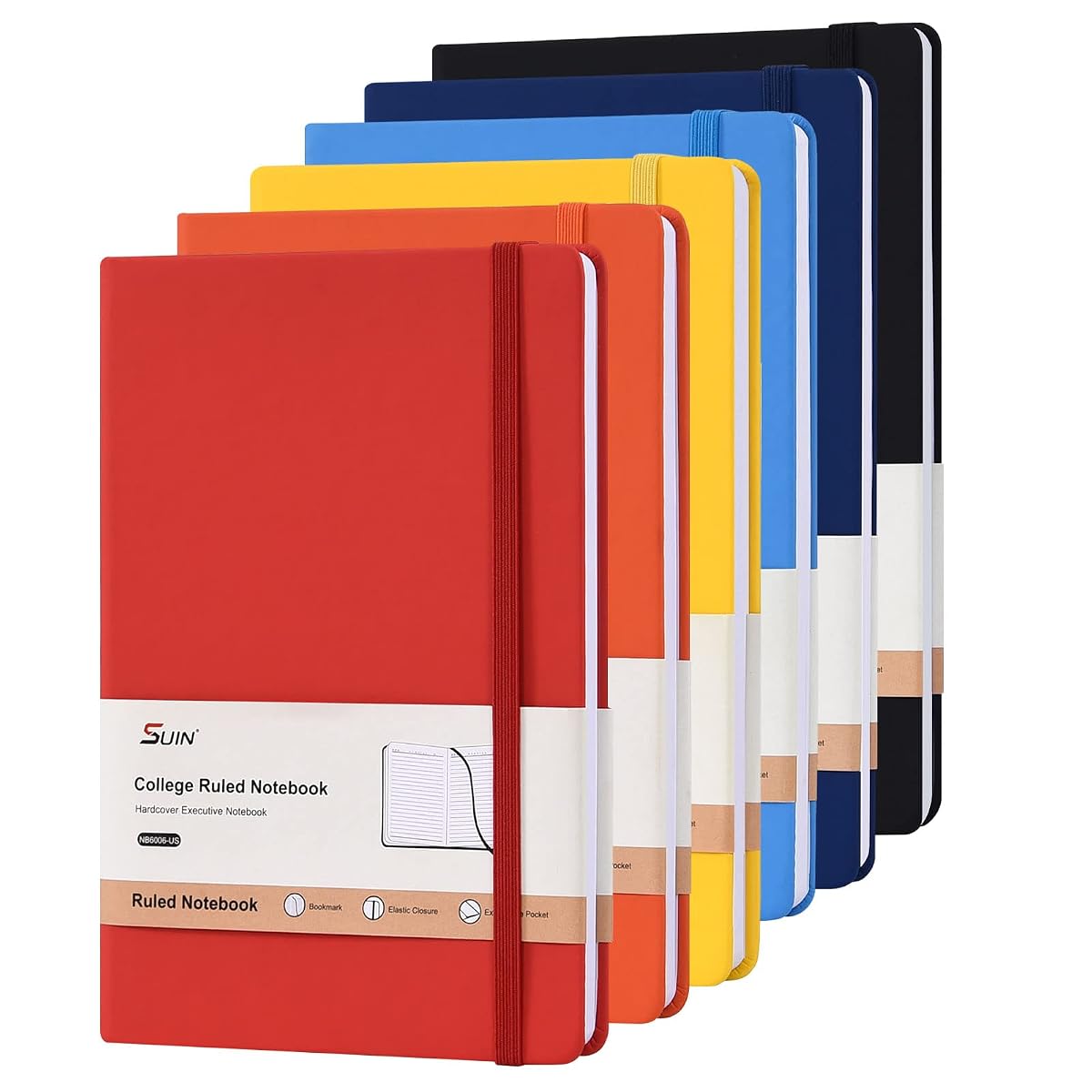
The 5-Minute Journal

Hatch Restore 3 Sunrise Alarm

Manta Original Sleep Mask

Oura Ring Gen 3
beingvela is reader-supported. Some links are affiliate links, we may earn a small commission at no extra cost to you.
Prices are snapshots and change over time.
Shop the Everyday Essentials
The tools and gear we actually use, curated and tested by our editors.
Browse essentialsGo deeper with a guide
The Sleep Reset
A 14-day protocol to fix your circadian rhythm, deepen your sleep, and help you wake up rested without relying on supplements.
Read the guide GuideFoundations of Strength
The beginner-friendly framework to build lifelong strength with just three movements, twice a week.
Read the guide GuideEat for Energy
A practical nutrition guide to stabilise blood sugar, sharpen focus, and eat well without counting anything.
Read the guideKeep reading
 Mindfulness
The Two-Minute Mindfulness Anchors: Habit-Stacking Attention
Most people fail at meditation because they treat it as a 20-minute practice you sit down for. Anchor it to things you already do instead, kettle, elevator, red light, and it survives every schedule.
Mental HealthRegulate Your Nervous System: A Field Guide to Calm
Stress isn't a personality trait, it's a physiological state you can measure and change. Here's how to actually shift out of it, on the days you need it most.
 Mental Health
The Anxiety-Sleep Loop: How to Break the Cycle in Two Weeks
Poor sleep amplifies anxiety, and anxiety wrecks sleep. Here's the neuroscience behind the feedback loop and the specific protocol that interrupts it.