Sleep Debt: Why Weekend Sleep Helps but Does Not Reset Everything
Sleeping longer on the weekend can reduce sleepiness, but it does not make chronic short sleep disappear. Here is a calmer way to repair a tired week.
Explore more in Recovery.

If you sleep longer on Saturday, that is not laziness. It is often your body collecting part of what the week withheld. The problem is the story we attach to it: two long mornings can make you feel better, but they do not guarantee that a week of short sleep has been fully repaired.
The practical answer is not to panic about one late morning. It is to stop treating weekend sleep as the only recovery plan. Protect more sleep on ordinary nights, keep your wake time reasonably stable, and use weekend catch-up as a bridge rather than a reset button.
What sleep debt means
Sleep debt is the gap between the sleep your body needs and the sleep it gets. Needs vary, but most adults do better with roughly seven or more hours of regular sleep. A single short night can make you sleepy; repeated short nights can affect attention, mood, and how safe it is to drive or operate equipment.
The usual benchmark comes from a joint consensus statement from the American Academy of Sleep Medicine and the Sleep Research Society: adults aged 18 to 60 should sleep 7 or more hours per night on a regular basis. The National Sleep Foundation gives a similar range of 7 to 9 hours for most adults, and 7 to 8 hours for older adults. Seven hours is a floor, not a target to aim slightly above, and some people genuinely need closer to eight or nine. Your own need is the amount that leaves you alert through the day without heavy caffeine, a mid-afternoon crash, or a strong urge to nap.
There is no home test that measures your debt in hours with precision, and that is fine, because the repair does not need a precise number. A useful estimate is simpler: compare your usual weeknight sleep with how you feel after two or three nights of 7 to 8 hours. If the difference is obvious, you were probably running short. Other signs are needing an alarm every morning and still waking groggy, falling asleep within minutes of getting into bed most nights, and feeling noticeably sharper after a holiday week of longer sleep. Treat the gap as a direction to move in, not a score to chase to zero.
What the weekend can and cannot do
Extra sleep can reduce subjective sleepiness after a short week. Research also suggests that repeated cycles of short weekday sleep and weekend recovery do not reliably restore every cognitive or metabolic measure. The studies are not a reason to fear sleeping in; they are a reason not to use it as permission to undersleep every weekday.
A controlled lab study makes the limit concrete. In a 2019 Current Biology trial, 36 healthy adults were assigned to adequate sleep, continuous sleep restriction at about 5 hours a night, or restriction interrupted by a weekend of sleep as long as they liked. The weekend group slept about 1.1 hours more than their baseline in total across the weekend, which sounds like a real catch-up. It was not enough. When short sleep resumed, their whole-body, liver, and muscle insulin sensitivity still fell by about 9 to 27 percent, and they ate more after dinner and gained weight. The authors concluded that weekend recovery sleep is not an effective strategy to prevent the metabolic effects of repeated short sleep. It was a small, short lab study in young adults, so it does not prove what happens over years, but it shows that feeling better on Monday morning and being fully repaired are two different things.
Long-term population data tells a kinder, but still limited, story. A Swedish cohort study followed 43,880 adults for 13 years and compared weekday and weekend sleep with mortality. Among people under 65, those who slept 5 hours or less on both weekdays and weekends had a 65 percent higher mortality rate than steady 6 to 7 hour sleepers, while those who slept short on weekdays but long at weekends had a mortality rate that did not differ from the steady group. That is an association, not proof that the lie-ins did the protecting: people who can sleep long at weekends may differ in other ways, and the pattern was not seen in people aged 65 and over. Read together, the two studies agree on the practical point. Weekend sleep is better than no recovery at all, and steady sleep every night is better than weekend sleep.
Why regularity matters as much as duration
Duration gets most of the attention, but the clock matters too. A prospective cohort study found that sleep regularity was a stronger predictor of mortality risk than sleep duration, which means that sleeping and waking at roughly the same times may matter at least as much as the total hours. That was observational research, so it cannot prove that irregular sleep causes harm, and it does not mean a single late night is dangerous. It does explain why the repair plan in this article leans on a stable wake time rather than only on total hours. A regular schedule also makes it easier to fall asleep, because your body starts preparing for sleep at a predictable time each evening.
Naps: useful, with limits
A nap is a reasonable tool for a bad night, not a replacement for nighttime sleep. Keep it short, about 20 to 30 minutes, and early in the afternoon, so it lifts alertness without stealing sleepiness from bedtime. A long or late nap can leave you groggy on waking and then wide awake at midnight, which is the opposite of recovery. If you nap most days and still feel unrefreshed, that is a sign the nighttime schedule needs attention first, or that a clinician should check for a sleep disorder.
A better repair plan
- Add 30–60 minutes of sleep opportunity on several weeknights instead of attempting one heroic weekend recovery.
- Keep weekend wake time within roughly 1–2 hours of your usual time when possible, then let yourself sleep longer if you are still tired.
- Use a short early-afternoon nap when needed; keep it brief enough that bedtime remains possible.
- Move caffeine earlier when sleep is behind. It can make you feel functional while quietly pushing the next night later.
Caffeine deserves its own line in the repair plan because it hides sleep debt so well. In a small study, 400 mg of caffeine taken 0, 3, or 6 hours before bed disrupted sleep, even when taken 6 hours earlier, which is roughly the caffeine in two large cups of coffee. The dose was high and the study was small, so it does not prove that one morning cup harms your night, but it is a good reason to move caffeine earlier in the day while you are catching up. A practical rule is to keep caffeine to the morning and early afternoon, and to treat an afternoon coffee as a loan against the next night.
A two-week repair plan
Recovery works better as a fortnight of small changes than as a single heroic weekend. The plan below is deliberately boring: earlier bedtimes, a steady wake time, light in the morning, and caffeine moved earlier. None of it requires a new device or a supplement.
- Week 1: move bedtime 15 to 30 minutes earlier on weeknights, and keep the same wake time every day, including the weekend, within about an hour.
- Week 1: get outside or near a bright window within an hour of waking, and dim the lights in the last hour before bed.
- Week 1: keep caffeine to the morning and early afternoon, and skip the late-afternoon cup for these two weeks.
- Week 2: if the earlier bedtime is sticking, move it another 15 minutes earlier, and add a short early-afternoon nap only on days when you are clearly short.
- Week 2: on the weekend, sleep as long as your body asks, but keep the wake time within roughly 1 to 2 hours of usual, so Sunday night does not become a second Monday problem.
- After two weeks: judge the plan by daytime alertness, mood, and how easy it is to fall asleep, not by a single good morning.
When the problem is not your schedule
If you regularly sleep enough but wake unrefreshed, snore loudly, gasp, wake with headaches, or struggle to stay awake during the day, do not keep optimizing your bedroom as if this were a productivity problem. Ask a clinician about possible sleep disorders and medication effects.
The low-drama version
Sleep is not a weekly budget you can balance perfectly. Aim for a stable opportunity to sleep, make the room dark and comfortable, and recover from short nights without turning the weekend into a second time zone. A better Tuesday night is usually more valuable than a heroic Sunday morning.
"Weekend sleep is recovery. Regular sleep is the foundation."
Continue with The Weak Ties Problem: Why Casual Friendships Matter More Than You Think and The Anxiety-Sleep Loop: How to Break the Cycle in Two Weeks.
Questions readers ask about sleep debt: why weekend sleep helps but does not reset everything
Not automatically. Extra sleep can reduce sleepiness after a short week. The concern is relying on large schedule swings every weekend while continuing to undersleep on most weeknights.
There is no universal number. Let yourself recover, but try to keep the wake time reasonably close to normal so Sunday night does not become a second Monday problem.
A short early-afternoon nap can improve alertness, but it does not replace regular nighttime sleep. Long or late naps can also make it harder to fall asleep at bedtime.
Seek advice if you are persistently unrefreshed despite enough time in bed, regularly fall asleep during the day, snore loudly, gasp, or wake with headaches. Those patterns deserve more than a new alarm or supplement.
Sources & Peer-Reviewed References
- Your Guide to Healthy Sleep· National Heart, Lung, and Blood Institute
- Effects of six weeks of chronic sleep restriction with weekend recovery on cognitive performance· Sleep / PubMed
- Napping and weekend catchup sleep do not fully compensate for high rates of sleep debt· Sleep Medicine / PubMed
- Recommended amount of sleep for a healthy adult: a joint consensus statement of the American Academy of Sleep Medicine and Sleep Research Society· Journal of Clinical Sleep Medicine / PubMed
- Ad libitum weekend recovery sleep fails to prevent metabolic dysregulation during a repeating pattern of insufficient sleep and weekend recovery sleep· Current Biology / PubMed
- Sleep duration and mortality: does weekend sleep matter?· Journal of Sleep Research / PubMed
- Sleep regularity is a stronger predictor of mortality risk than sleep duration: a prospective cohort study· Sleep / PubMed
- Caffeine effects on sleep taken 0, 3, or 6 hours before going to bed· Journal of Clinical Sleep Medicine / PubMed
Tools referenced in this piece
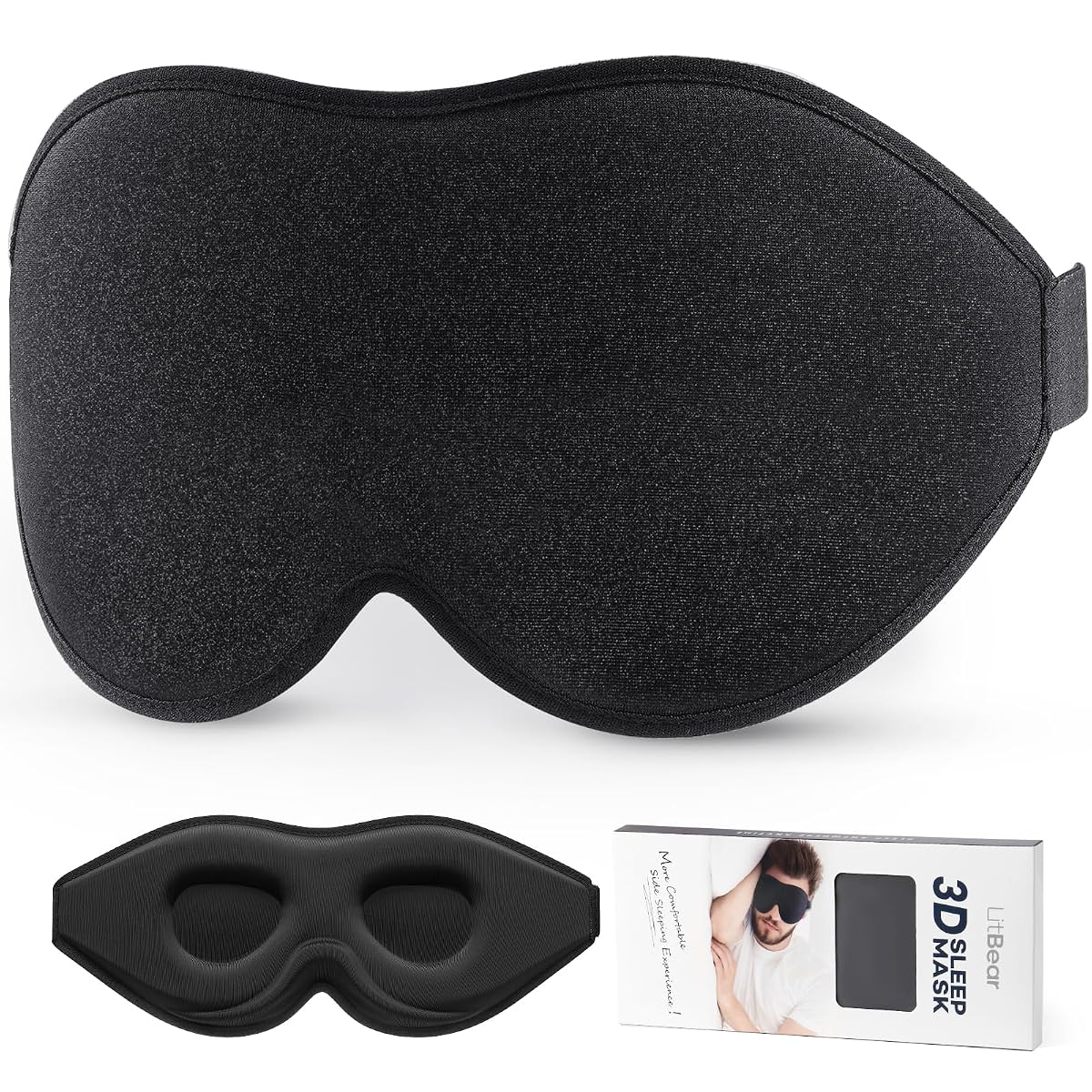
Manta Original Sleep Mask

Hatch Restore 3 Sunrise Alarm
beingvela is reader-supported. Some links are affiliate links, we may earn a small commission at no extra cost to you.
Prices are snapshots and change over time.
Shop the Everyday Essentials
The tools and gear we actually use, curated and tested by our editors.
Browse essentialsGo deeper with a guide
The Sleep Reset
A 14-day protocol to fix your circadian rhythm, deepen your sleep, and help you wake up rested without relying on supplements.
Read the guide GuideEat for Energy
A practical nutrition guide to stabilise blood sugar, sharpen focus, and eat well without counting anything.
Read the guide GuideFoundations of Strength
The beginner-friendly framework to build lifelong strength with just three movements, twice a week.
Read the guideMore in Recovery
Continue with more practical reading from this category.
 Mental Health
The Anxiety-Sleep Loop: How to Break the Cycle in Two Weeks
Poor sleep amplifies anxiety, and anxiety wrecks sleep. Here's the neuroscience behind the feedback loop and the specific protocol that interrupts it.
 Mental Health
The Weak Ties Problem: Why Casual Friendships Matter More Than You Think
The loneliness epidemic isn't really about lacking close friends, most lonely people have those. It's about the disappearance of weak ties: the barista, the neighbor, the person at the gym. Here's why those relationships matter for mental health, and how to rebuild them.
 Recovery
Sauna and Longevity: What the Finnish Data Actually Shows
A long Finnish cohort linked frequent sauna use with lower cardiovascular and all-cause mortality. Here's what that association does—and does not—tell us about a safe routine.
 Mental Health
Regulate Your Nervous System: A Field Guide to Calm
Stress isn't a personality trait, it's a physiological state you can measure and change. Here's how to actually shift out of it, on the days you need it most.