
Why You Should Lift Heavy Things After 40 (Especially If You've Never Lifted)
The single most protective intervention against age-related decline isn't cardio, isn't a supplement, and isn't yoga. It's picking up heavy things twice a week. Here's why, and how to start if you've never touched a barbell.

If you gave me one intervention to prescribe to every adult over 40, one thing that would do more for the next four decades of their life than any other single change, it wouldn't be a diet, a meditation practice, a sleep protocol, or a supplement. It would be lifting heavy things twice a week. The evidence for this is not new and not controversial; it has been settled science for at least 20 years. It's just that the cultural narrative around 'fitness after 40' has been dominated by cardio, yoga, and gentle mobility work, and the single most protective intervention against age-related decline sits quietly in the corner, ignored.
This piece makes the case for resistance training as the highest-leverage physical intervention for adults in their 40s, 50s, and beyond, including, especially, adults who have never touched a weight in their life. It's not about becoming a bodybuilder. It's about buying yourself another 20 years of independence, functional capacity, and metabolic health, with an investment of roughly 90 minutes per week.
What actually breaks down as you age
The medical term for age-related muscle loss is sarcopenia, and the numbers are worse than most people realize. After age 30, the average adult loses about 3-8% of their muscle mass per decade if they don't actively resist it. After 60, the rate accelerates. By age 80, an untrained person has typically lost 30-40% of the peak muscle mass they had at 25, and, more importantly, they've lost even more of the strength and power output, because the fast-twitch fibers that produce force disappear faster than the slow-twitch fibers that just take up space.
This is the mechanism behind the vast majority of what people call 'getting old.' Trouble getting out of a low chair. Difficulty carrying groceries. Fear of stairs. The fall that puts a grandparent in a nursing home. None of these are inevitable consequences of aging in the way people frame them. They are consequences of accumulated muscle and strength loss that started at 30 and compounded silently for four decades, and they are largely preventable, and even partially reversible, with a shocking amount of resistance training.
"Sarcopenia is not caused by aging. It's caused by not training. The 85-year-old who still deadlifts twice a week has more muscle than the sedentary 55-year-old, and it's not close."
, Dr. Peter Attia, longevity physician
The metabolic case
Beyond the obvious functional benefits, resistance training does something almost nothing else does: it protects your metabolic health as you age. Muscle tissue is the largest glucose sink in the body. More muscle means more capacity to clear blood sugar without insulin doing overtime, which means lower fasting insulin, lower inflammation, and dramatically lower risk of type 2 diabetes, the single most common metabolic disease of aging in developed countries. This is why the incidence of diabetes is 40-60% lower in adults who resistance-train regularly, controlling for everything else.
The bone-density case is equally strong. Peak bone mass happens in your late 20s. From there it slowly declines, and after menopause for women or age 65 for men, the decline accelerates into the range where fractures become a serious risk. Resistance training is one of the few interventions that reliably increases bone density in adults, walking doesn't do it, swimming doesn't do it, yoga barely does it. The mechanical loading of picking up heavy things is the signal bones need to stay dense, and no pill or diet has the same effect.
The 'I'm too old to start' fallacy
The single most common objection to starting resistance training in your 50s or 60s is 'I'm too old to build muscle now.' The research says the opposite. Studies of adults starting resistance training in their 70s and 80s consistently show meaningful strength gains within 12 weeks, often 30-50% improvements in the primary lifts, and measurable increases in muscle cross-sectional area within 6 months. The response to training is slower and smaller in absolute terms than it would be for a 25-year-old, but it is still large, still meaningful, and still protective.
One landmark 1994 study in a nursing home put residents with an average age of 87 on a 10-week resistance program. Their leg strength more than doubled. Their walking speed improved by nearly 50%. Several who had needed walkers stopped needing them. If people who are on average 87 and starting from a hospital bed can produce those results, the story you're telling yourself about being too old at 55 is a story, not a physiological reality.
The 90-minute-a-week protocol
The minimum effective dose for meaningful strength and muscle gains is startlingly low: two sessions per week, 40-50 minutes each, hitting the major movement patterns. Squat, hinge, push, pull, carry. You do not need to train five days a week. You do not need to spend two hours in the gym. You need to show up twice a week with intent, work hard for less than an hour, and let your body do the rest.
- Day one: goblet squat (or barbell squat), overhead press, one-arm row, kettlebell swing
- Day two: deadlift (or hip hinge with dumbbells), push-up variation, chin-up or lat pulldown, farmer's carry
- Every set to within 2-3 reps of failure, the intent has to be real, not casual
- 3-4 sets of 5-10 reps per exercise, 90 seconds rest between sets
- Progress the weight by 2.5-5 lbs whenever you complete all your reps for two sessions in a row
If you've never lifted before, the first month is entirely about learning the movement patterns with light weight, a broomstick for the barbell versions, or 10-15 lb dumbbells if that's what you have. Trying to lift heavy in month one is how injuries happen. Trying to still be lifting light in month six is how progress stalls. The transition from 'learning' to 'training' happens around week four to six, and it happens naturally as long as you're paying attention.
Kettlebells as the underrated on-ramp
For people who feel intimidated by barbells or don't have gym access, kettlebells are the most underrated on-ramp into serious resistance training. A single 16-24 kg kettlebell (16 for most women, 24 for most men) covers 80% of what a beginner-intermediate needs: swings for the posterior chain and grip, goblet squats for the legs, presses for the shoulders, rows for the back. The learning curve is shorter than a barbell, the injury rate lower for beginners, and the ceiling, for the purpose of general strength and health, is genuinely quite high.
The kettlebell swing in particular is a movement most adults over 40 should be doing three times a week for the rest of their life. It trains the hip hinge (the movement pattern that fails first and produces most back injuries), builds grip strength (see the prior post on why grip matters for mortality), raises heart rate into the cardio-adaptive zone, and takes 60 seconds per set. Ten sets of 10 across a session is 100 reps of one of the most protective movements in human physiology, in about 15 minutes.
The pushback you'll hear and why it's wrong
You will hear, from doctors and family members and well-meaning acquaintances, that lifting weights is dangerous at your age. This is one of the most poorly calibrated pieces of common advice in circulation. The injury rate for supervised resistance training in older adults is lower than the injury rate for gardening, for pickleball, and for most forms of jogging. What is genuinely dangerous at your age is not lifting, because the loss of strength and bone density from not lifting is the mechanism behind the falls, fractures, and functional decline that actually put people in nursing homes.
The framing that helps is this: you are not choosing between the risk of lifting and no risk. You are choosing between the small, front-loaded risk of lifting (occasional muscle soreness, rare acute injury with good form) and the large, back-loaded risk of not lifting (sarcopenia, osteoporosis, metabolic disease, loss of independence). The math is not close. The person telling you it's dangerous to start lifting at 55 is confidently wrong in a way that will cost you a decade of function.
The one-line version
Twice a week, for 45 minutes, pick up heavy things. Squat, hinge, push, pull, carry. Start light enough to learn form; progress the weight whenever you comfortably complete your reps. Do this for the rest of your life and you will bank an extra decade of independence, metabolic health, and functional capacity at the end that most of your peers will not have. The best time to start was 20 years ago; the second-best time is this week.
Tools referenced in this piece
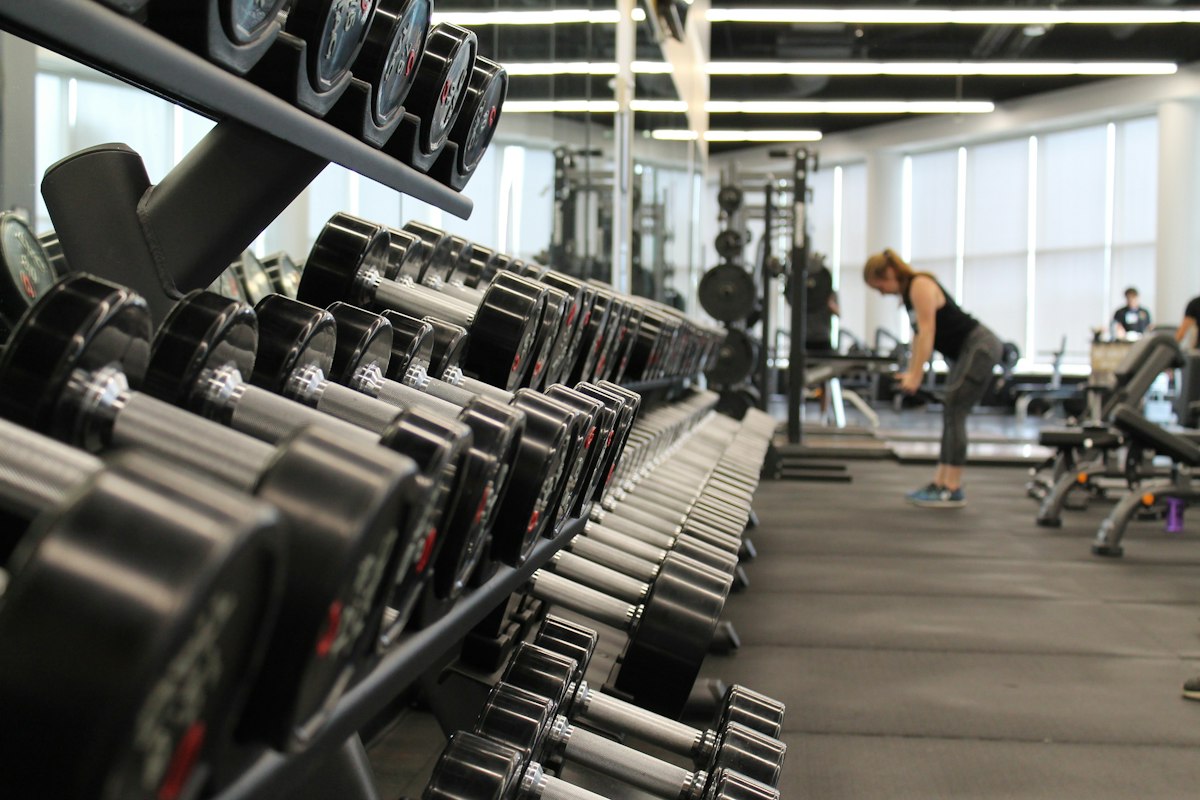
BowFlex SelectTech 552 Adjustable Dumbbells

Yes4All Vinyl Coated Cast Iron Kettlebell
WHOOP 5.0 Activity Tracker
Theragun Mini (3rd Gen)
beingvela is reader-supported. Some links are affiliate links, we may earn a small commission at no extra cost to you.
Prices are snapshots and change over time.
Shop the Everyday Essentials
The tools and gear we actually use, curated and tested by our editors.
Browse essentialsGo deeper with a guide
Foundations of Strength
The beginner-friendly framework to build lifelong strength with just three movements, twice a week.
Read the guide GuideThe Sleep Reset
A 14-day protocol to fix your circadian rhythm, deepen your sleep, and help you wake up rested without relying on supplements.
Read the guide GuideEat for Energy
A practical nutrition guide to stabilise blood sugar, sharpen focus, and eat well without counting anything.
Read the guideKeep reading
 Longevity
Grip Strength: The Overlooked Longevity Marker Nobody Trains
Grip strength predicts all-cause mortality better than blood pressure, and most people are quietly losing it every year without noticing. Here's why it matters and how to train it in 10 minutes a week.
 Longevity
VO2 Max: The Single Best Predictor of How Long You'll Live
A 2018 JAMA study found that low cardiorespiratory fitness carries more mortality risk than smoking, diabetes, and heart disease combined. Here's what VO2 max actually is, why it matters more than any other biomarker, and the training that reliably moves the number.
 Longevity
Intermittent Fasting: Beyond the Basics
Explore advanced intermittent fasting strategies for cellular autophagy, metabolic flexibility, and prolonged vitality.